Why Self-Teaching Photography Stalls (and what actually moves you forward)
You've bookmarked seventeen tutorials. You've watched YouTube videos about aperture at midnight. You've read the same manual mode explanation four times, on four different websites, and you still freeze when the light changes and you have a fraction of a second to adjust.
You're doing everything right. You're putting in the effort. And you're still not where you thought you'd be by now.
That's not a you problem. That's a method problem.
There is a reason experienced photographers give the same answer: image critique and mentorship in the field. Not more tutorials. Not better gear. Not another course you complete alone at your kitchen table at 10 PM.
This post is an honest look at both paths. DIY learning has real value, let's name that clearly. And immersive, in-field mentorship does something that no amount of self-study can replicate. Understanding the difference is what helps you stop spinning your wheels and start making the photographs you actually came here to make.

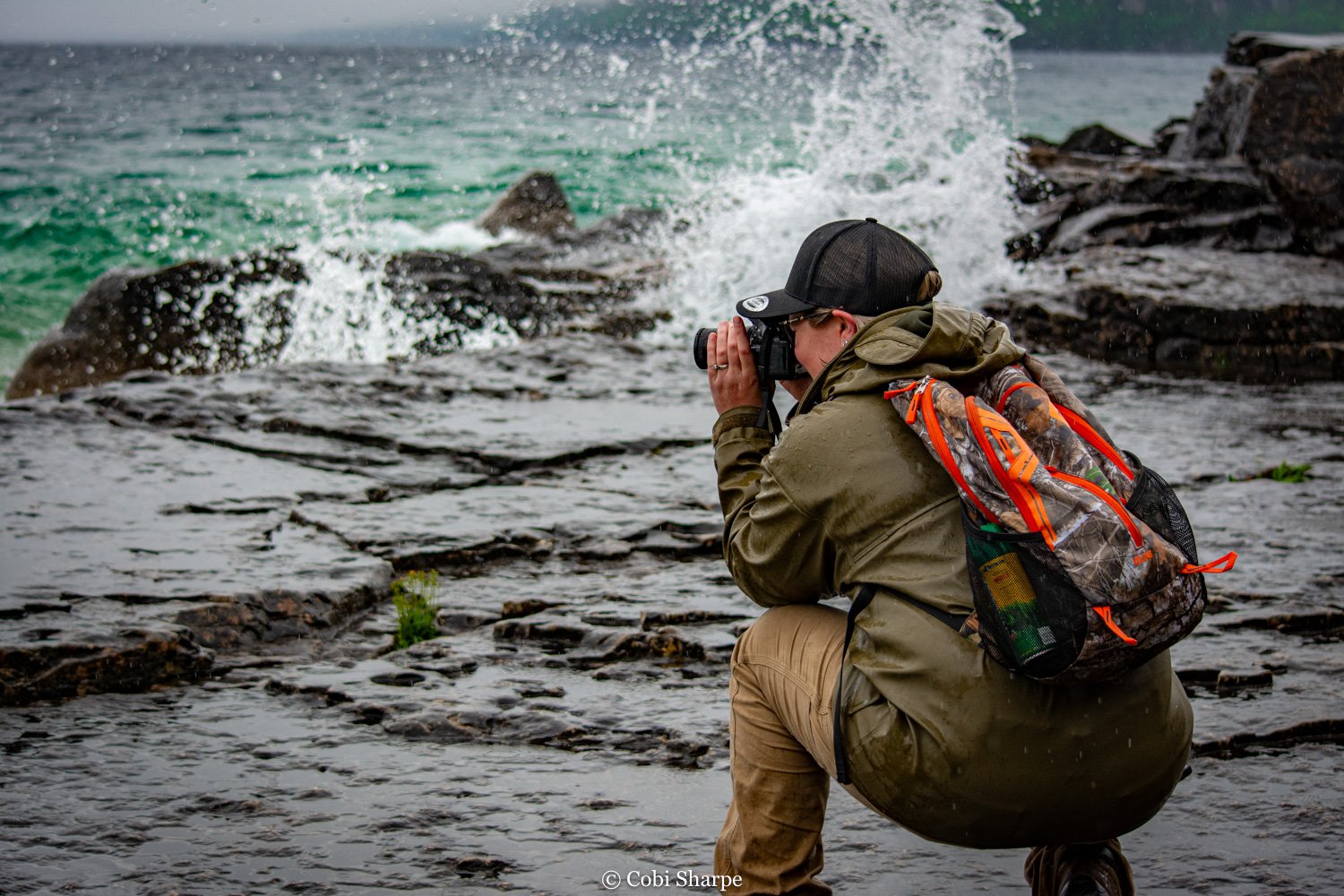
Bruce Peninsula National Park, Tobermory
Why DIY Photography Learning Has Real Value — And Real Limits
Let's be fair about this, because self-directed learning deserves credit. If you've spent time watching tutorials, reading composition guides, experimenting on your own, then that time wasn't wasted. You've been building a foundation. You've been curious. That matters.
Self-teaching genuinely works for:
Learning concepts at your own pace. Understanding the exposure triangle, the relationship between ISO and noise, why aperture affects depth of field, and these are things you absolutely can learn from a blog post or a video. No argument there.
Exploring your aesthetic instincts. Wandering your neighbourhood with a camera and no agenda is actually good creative practice. Some of the best photography habits are built in low-stakes, pressure-free outings.
Maintaining momentum between mentored sessions. Photographers who practise consistently between guided experiences improve faster than those who only show up when someone is watching.
Here's where it stalls.
Self-teaching is almost entirely input without feedback. You read. You watch. You go out and shoot. You come home and look at your photos and you don't quite know what to fix, why your compositions feel slightly off, why the light looks flat when you were standing right in front of something beautiful.
You can't see your own blind spots. No one can. That's what makes them blind spots.
The single highest-leverage activity for photographic growth is having your images reviewed by someone who can see what you can't, and having that conversation happen in the field, in real time.
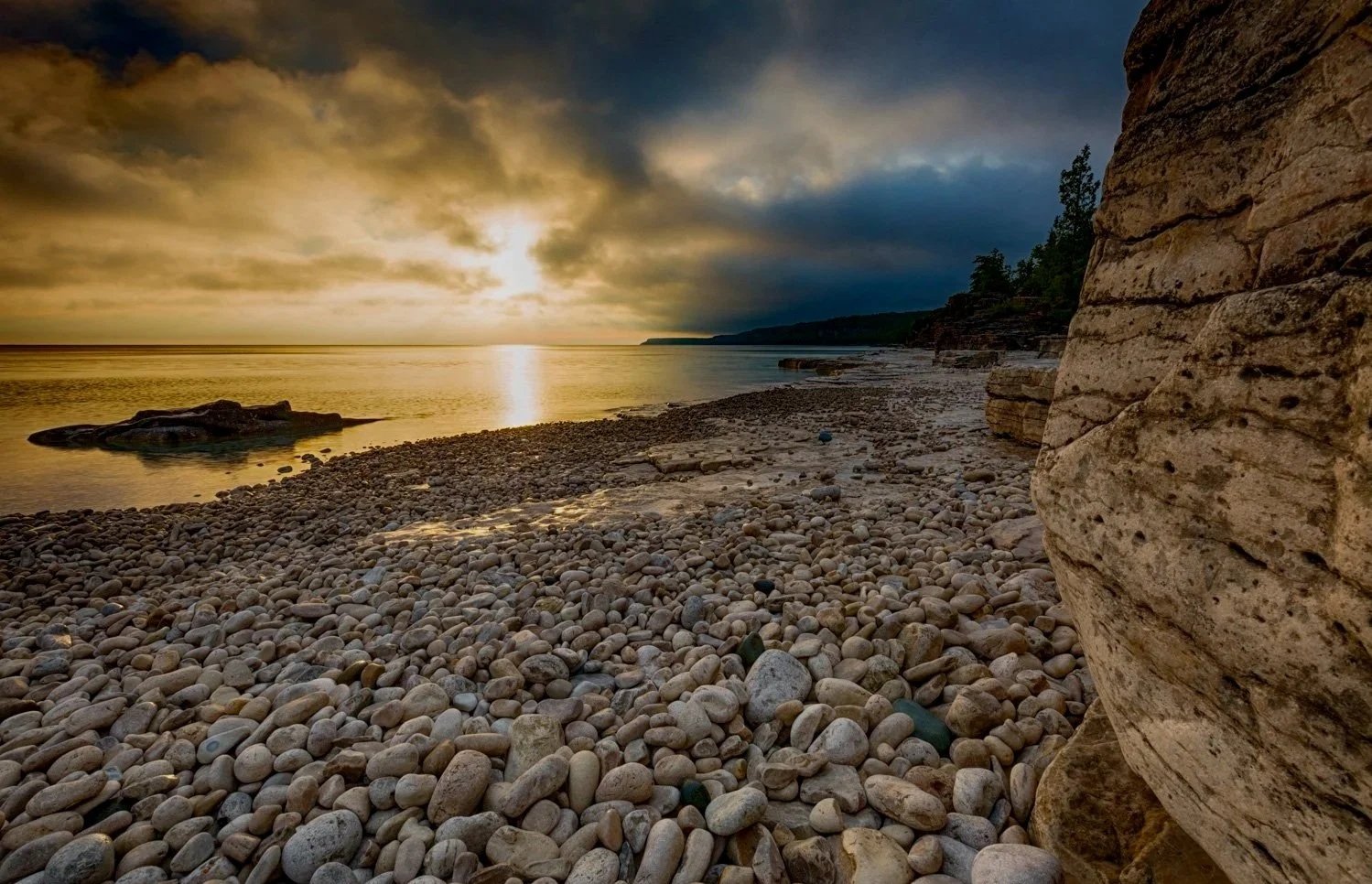
© Cobi Sharpe, Bruce Peninsula National Park, Tobermory
What Actually Moves the Needle: The Case for In-Field Mentorship
There is a specific kind of learning that only happens in the field, beside someone who knows what they're looking at, and knows how to ask you the right question instead of just handing you the answer.
Here's what that looks like in practice.
Real-Time Feedback Closes the Gap Between What You Saw and What the Camera Captured
You saw a stunning scene. You took the shot. The photo doesn't look like what you experienced. This gap, between the image in your mind and the image on your card, is where most photographers live for years.
In a solo practice, you live in that gap. You try to diagnose it yourself. Sometimes you find the answer; often you don't, and the frustration compounds.
In the field with a mentor, that gap closes in minutes. "What were you trying to say with this shot?" is a question that unlocks something most photographers have never been asked. Not what did you do, but what were you seeing, what mattered to you, and how can we make the camera say that?
That conversation, repeated over days, becomes instinct.
Your Hands Learn Something Your Brain Can't
There's a kind of knowledge that doesn't live in your head, it lives in your hands. Muscle memory. The automatic reach for the shutter dial when the light shifts. The instinct to drop to a lower angle when the foreground feels empty.
Reading about aperture is understanding. Adjusting aperture on location, in shifting morning light, with feedback on what just changed in the frame, that's muscle memory. The two are not the same, and one does not substitute for the other.
A multi-day experience gives you repetition across different light, different conditions, different subjects. By day three, your hands know where to reach. Your eye starts to move ahead of your brain.
That doesn't happen in a weekend of solo wandering. It doesn't happen in a year of tutorials watched alone. It happens in field, with feedback, with someone beside you pointing out what changed.
You Learn to See — Not Just to Shoot
Freeman Patterson — arguably the most influential Canadian photography educator — said it plainly: the least important questions in photography are technical. The important ones are why.
Why does this scene move you? What are you actually trying to capture? Is it the light, the texture, the feeling of standing somewhere that asked you to pay attention?
Technical skills are learnable. Seeing — really seeing — is something you develop in relationship with a landscape, a mentor, and a community of people who are paying the same quality of attention you are.
This is what's difficult to find in a camera club. It's what's impossible to find in a YouTube comment section. It's what emerges naturally when you spend four days on a shoreline with instructors who believe that the why behind your photograph matters more than your histogram.
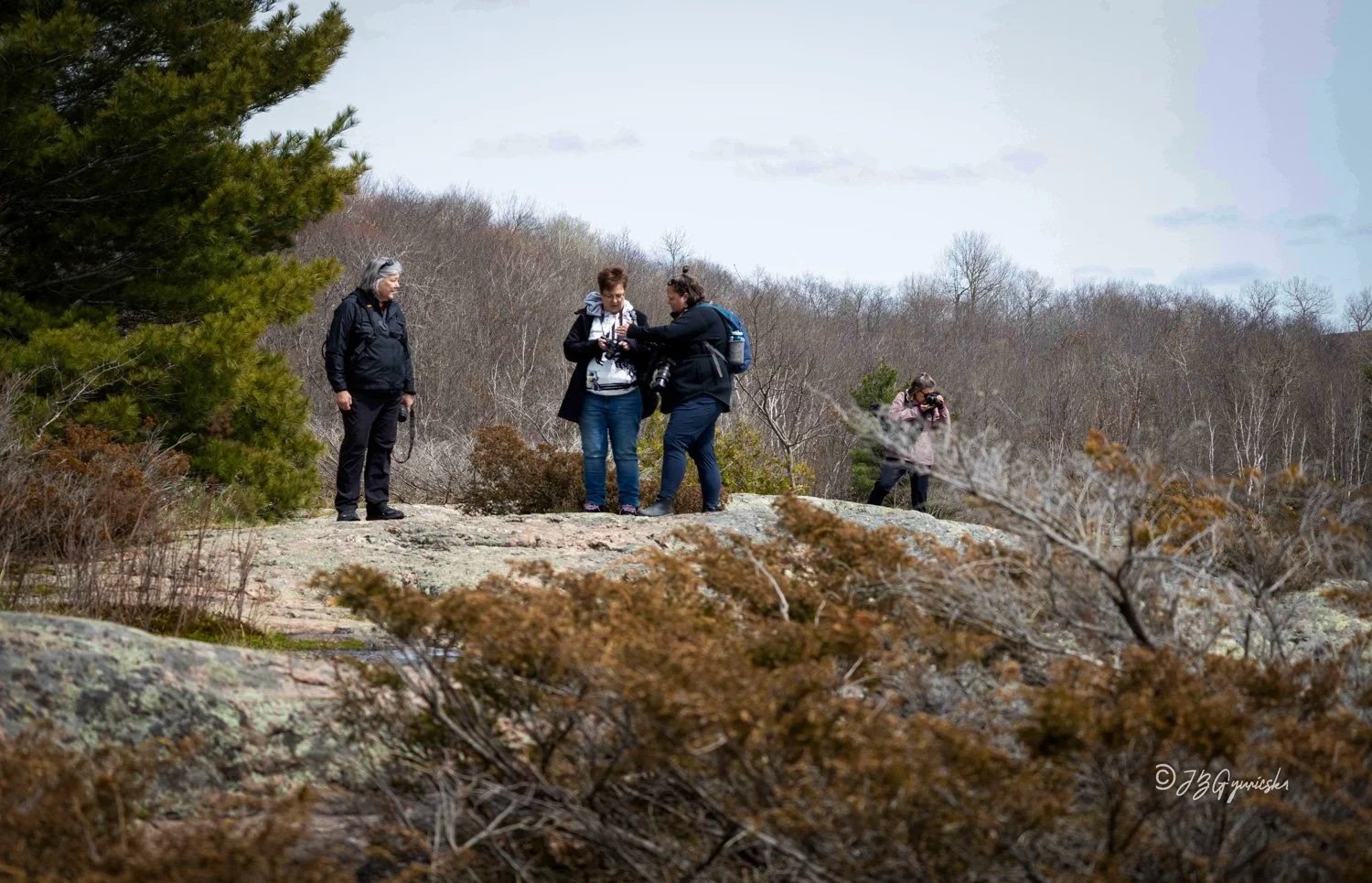
In-person mentorship moves the needle forward if you want to become better at capturing what you saw.
Why "More Time Shooting" Doesn't Automatically Mean "Getting Better"
You can shoot for ten years with the same blind spots and never close the gap between what you're seeing and what your camera is capturing if you're doing it entirely alone. Practice without feedback reinforces what you already do. That's not improvement. That's repetition.
The photographers who improve fastest aren't the ones who shoot the most. They're the ones who get the most specific, honest feedback on what they're making, and then go immediately back out to apply it.
This is why the answer is always the same. Image critique. Field mentorship. Not more megapixels. Not a mirrorless upgrade. Not another tutorial saved to a playlist you'll come back to someday.
What You Actually Need to Get Better
Let's make this concrete. If you want to move the needle on your photography, here's how:
1. In-field feedback on real images, from someone who sees what you're not seeing.
Not "this is nice," but "what were you trying to say, and here's the gap between your intention and the result."
2. Repetition across different light and conditions.
Not one morning, one afternoon. Days of accumulated seeing, adjusting, reviewing, returning.
3. Compositional conversation, not just rules.
Rule of thirds is a starting point, not a ceiling. You need someone who can show you when to break the rules and why it works, using the actual landscape in front of you.
4. Permission to make mistakes in real time and correct them immediately.
The fastest learning loop in photography is: shoot, review, adjust, shoot again with feedback at every stage.
5. A community of women who are doing the same thing at the same pace.
This one's harder to quantify and impossible to overstate. When you're surrounded by women who would pull over for the light, who understand why you need an extra ten minutes at the cliff edge because the clouds are doing something, your creative practice stops feeling like an inconvenience and starts feeling like what it is: essential.
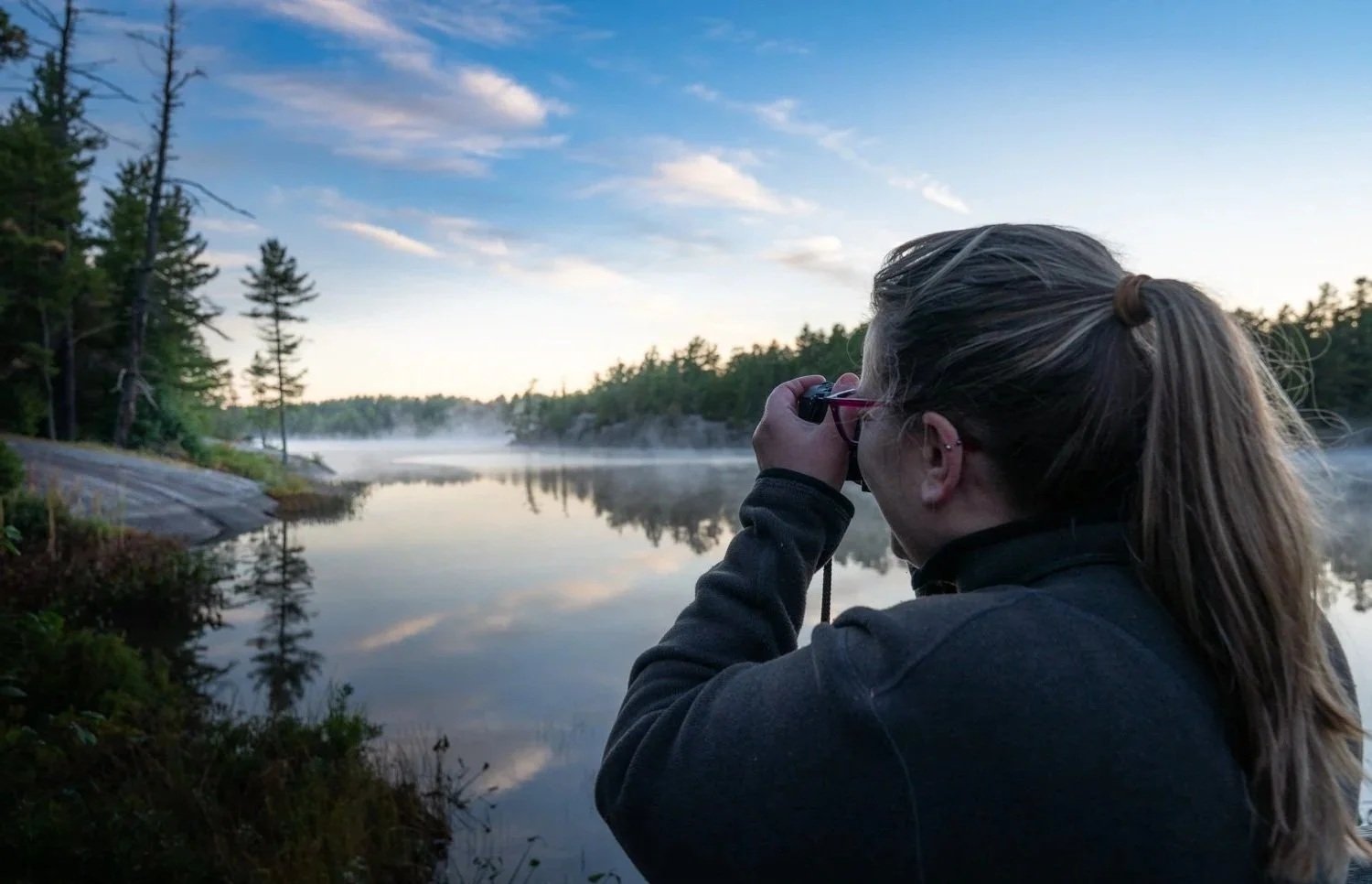
What Four Days in the Field Looks Like
The Bruce Peninsula Photography Workshop was built around exactly this: in-field mentorship, real-time image critique, and four days of accumulated seeing on one of Ontario's most dramatic shorelines.
Two professional photographers. Maximum ten women. Sunrise to stars, long enough that your hands learn what your brain is still catching up to.
This isn't about coming home with technically correct photographs. It's about going from "I used to photograph" to "I am a photographer" with the camera confidence and unshakeable understanding of your own eye to prove it.
You've done the tutorials. You've read the guides. You've put in the effort that solo learning allows.
This is the next step. And the Bruce Peninsula in September is where it happens.
When you're ready to make photography non-negotiable, here's where to start: Bruce Peninsula Photography Workshop →
Frequently Asked Questions
Does self-teaching ever work for photography?
Yes — for concepts and fundamentals, absolutely. The exposure triangle, composition basics, lighting theory: all learnable through quality educational content. Where self-teaching hits a ceiling is feedback. You can't see your own blind spots. The fastest growth happens when someone who can see what you can't is standing beside you in the field.
What is the fastest way to improve at photography?
Every experienced photographer says the same thing: regular image critique combined with mentorship in the field. Not better gear, not more tutorials, but specific feedback on what you're making and why, delivered in real time while you're still standing in front of the scene.
What should I look for in a photography workshop?
Small group size (so you're never waiting for feedback), in-field instruction (not just classroom theory), and instructors who care about why you make images, and not just the technical settings you used. The best workshops send you home with muscle memory and a changed relationship with your own eye.
Is my camera good enough for a workshop?
If it has manual mode, it's ready. The photographers who leave workshops with the most growth aren't always the ones with the newest gear. They're the ones who showed up and paid attention.